

Token Generator Ecosystems: How Modern Projects Create Tokens Without Writing Code
Blockchain adoption is no longer driven only by engineers and crypto-native startups. In 2025, tokens are being used by digital platforms, online businesses, communities, creators, and even traditional companies experimenting with Web3 models. As tokens become part of everyday digital infrastructure, the ability to create a token has shifted from a technical challenge into a strategic capability.
At the center of this transition is the token generator—a tool designed to remove complexity from token creation while preserving control, transparency, and reliability. Instead of building smart contracts from scratch, teams now use token makers and token creators to launch tokens efficiently and with significantly lower risk.
This article explores how token generators work, why they matter in today’s Web3 landscape, and how platforms like 20Lab are helping builders turn ideas into functioning blockchain assets.
Tokens as Infrastructure, Not Experiments
In the early days of blockchain, tokens were mostly experimental. They were launched to test ideas, raise funds, or explore new economic models. Today, that phase has largely passed. Tokens are now functional components inside digital ecosystems.
Modern tokens are used to:
Control access to platforms or features
Represent usage credits or internal currency
Reward participation and loyalty
Enable governance and voting
Coordinate decentralized communities
Because tokens now play an operational role, creating them requires tools that prioritize reliability and clarity over novelty.
What Is a Token Generator?
A token generator is a platform that automates the process of creating and deploying blockchain tokens. Instead of writing smart contract code manually, users define token parameters through an interface, and the platform handles deployment using standardized contract logic.
Most token generators allow users to configure:
Token name and ticker symbol
Total supply and decimal precision
Ownership and control settings
Deployment to a supported blockchain
Once deployed, the token exists on-chain and can be integrated into wallets, dApps, and Web3 services.
Token Maker vs Token Creator: Different Perspectives, Same Goal
Although the terms token maker, token creator, and token generator are often used interchangeably, each reflects a slightly different focus:
Token generator emphasizes automation and infrastructure
Token maker highlights ease of use and speed
Token creator focuses on ownership and customization
Modern platforms combine all three concepts into one experience—making token creation accessible without compromising professionalism.
Why Teams Prefer Token Generators Over Custom Smart Contracts
Custom smart contract development remains important for complex protocols, but for most token use cases it introduces unnecessary friction. Writing contracts from scratch requires time, expertise, audits, and ongoing maintenance.
A professional token maker offers several advantages:
Faster deployment timelines
Lower upfront costs
Reduced risk of coding errors
Standardized, predictable behavior
For startups, creators, and small teams, token generators make token creation practical instead of intimidating.
Business-Driven Reasons to Create a Token
The decision to create a token is increasingly driven by concrete business objectives rather than speculation. Common motivations include:
Utility Inside Products
Tokens unlock features, services, or content.
Incentive Mechanisms
Reward users for engagement, referrals, or contributions.
Community Governance
Enable voting and decentralized decision-making.
Internal Digital Economies
Power credits, points, or usage-based systems.
Fast Validation
Test Web3 concepts before scaling investment.
Token generators enable these strategies without requiring a dedicated blockchain engineering team.
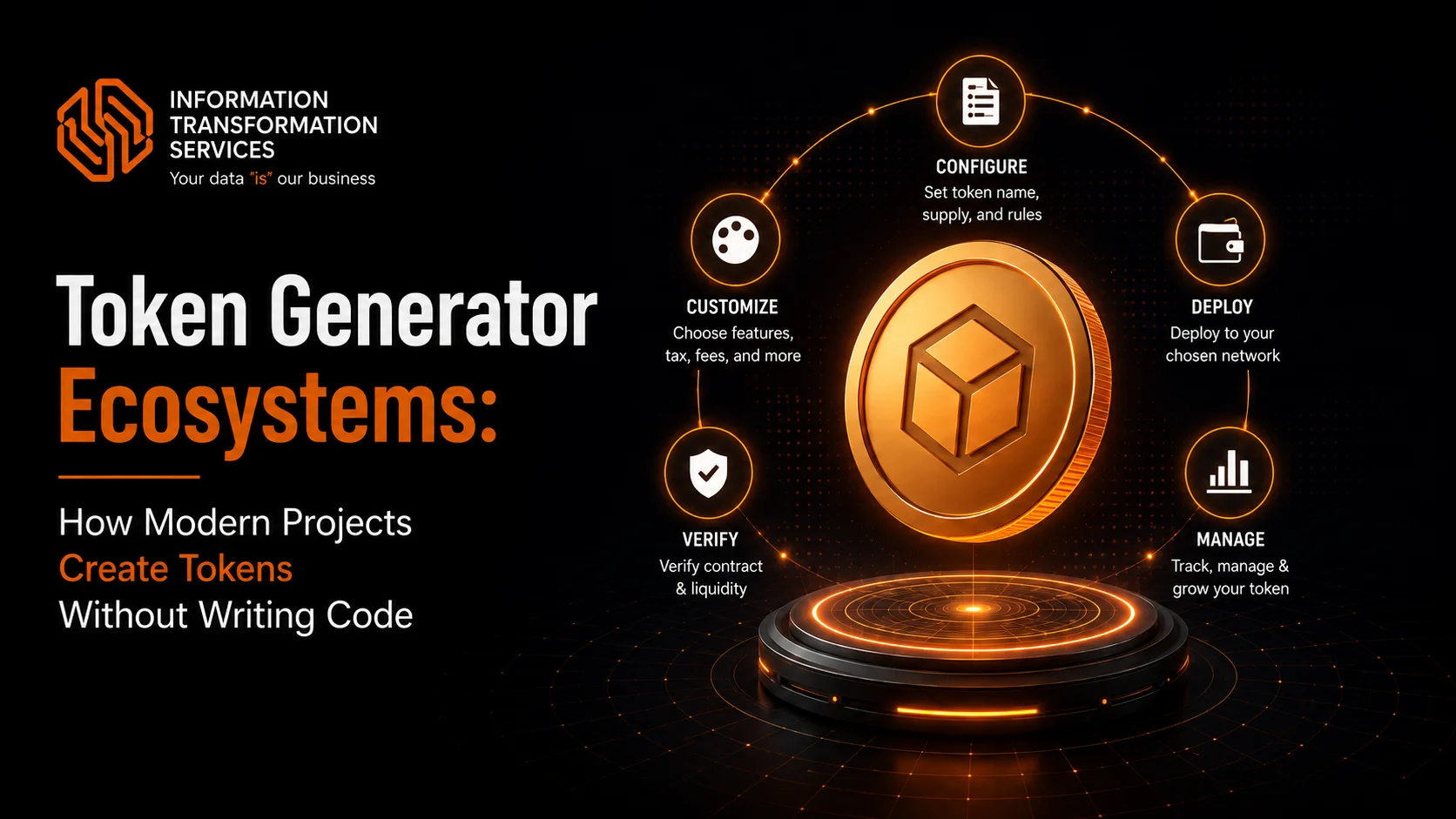
How a Token Generator Works in Practice
Behind the simple interface, a token generator manages a structured technical workflow:
User inputs token parameters
The platform applies those parameters to a standardized contract
The contract is compiled and prepared for deployment
The token is deployed to the blockchain
Ownership is assigned to the creator
By automating these steps, token creators reduce the likelihood of errors and ensure consistent outcomes.
Common Token Creation Errors (and How Platforms Help Avoid Them)
Even with modern tools, token creation requires thoughtful planning. Common mistakes include:
Launching a token without a clear purpose
Choosing an unrealistic supply model
Misconfiguring ownership or permissions
Adding unnecessary complexity
A well-designed token generator guides users through safe defaults and clear configuration steps, minimizing these risks.
What Makes a Token Generator Professional-Grade?
Not all token generators offer the same quality. A reliable platform should include:
Standardized Contract Templates
Based on widely accepted blockchain standards.
Transparent Ownership Control
Creators must clearly retain authority.
Intuitive User Experience
Designed for non-technical users.
Scalability
Tokens must function as projects grow.
Web3 Compatibility
Seamless wallet and network integration.
Choosing the right token maker has long-term implications for any project.
20Lab: A Token Generator Focused on Practical Outcomes
20Lab is built for founders, creators, and teams who want to create tokens without unnecessary complexity. The platform emphasizes usability, predictability, and real-world applicability rather than experimental features.
Instead of forcing users to understand smart contract mechanics, 20Lab provides a structured environment where token creation becomes straightforward.
Learn more about the platform:
Creating a Token with the 20Lab Token Generator
The 20Lab Token Generator allows users to configure and deploy tokens through a guided, no-code process. This makes it suitable for both experimentation and production launches.
The token generator is commonly used for:
Startup MVPs
Utility tokens for apps and platforms
Community and governance tokens
Agency-built Web3 solutions
You can explore the token creation flow here:
No-Code Token Creation and Web3 Expansion
No-code token creators are accelerating Web3 adoption by lowering barriers to entry. When token creation becomes accessible:
More ideas reach production
Costs decrease dramatically
Innovation spreads beyond developers
Token generators now play a foundational role, similar to website builders or cloud platforms in earlier digital transformations.
Token Generator Use Cases Across Multiple Industries
A flexible token generator can support a wide range of sectors:
SaaS Platforms
Usage credits, access tokens, subscriptions.
Gaming
In-game currencies and reward systems.
Creator Economy
Membership and fan engagement tokens.
Education
Certificates and achievement tokens.
DAOs and Communities
Governance and coordination tools.
The same token maker can power all of these use cases with minimal adjustment.
Security and Trust in Token Creation
Security remains critical when creating tokens. A professional token generator enhances security by:
Reducing manual coding errors
Using standardized, predictable contracts
Making ownership and deployment transparent
This approach helps build trust with users, partners, and communities.
The Future of Token Generators
Token generators continue to evolve alongside Web3 infrastructure. Future developments may include:
Advanced tokenomics configuration
Multi-chain token deployment
Integrated governance modules
Compliance-aware token settings
Platforms that focus on reliability and usability today are best positioned to support these advancements.
Final Thoughts: Token Creation Without Friction
The ability to create a token has become an essential capability for modern digital projects. Token generators transform what was once a complex engineering task into a clear, repeatable process.
A professional token maker like 20Lab enables founders, creators, and organizations to launch tokens confidently and efficiently. As blockchain adoption continues to expand, token generators will remain core infrastructure for building decentralized products and digital economies.