

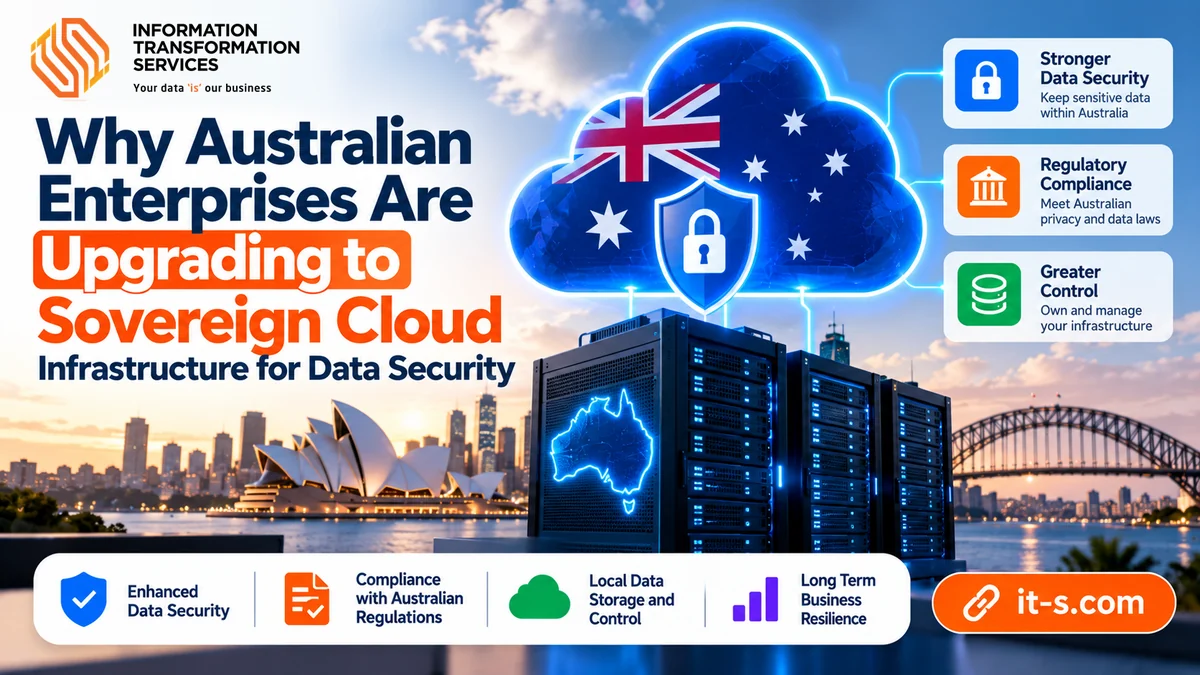
Why Australian Enterprises Are Upgrading to Sovereign Cloud Infrastructure for Data Security
The digital landscape for Australian businesses is undergoing a massive transformation. As organisations rapidly digitise their operations, the infrastructure supporting these changes has become a critical focal point for risk management. For companies initially scaling their capabilities through standard managed IT services, the foundational benefits of outsourced digital infrastructure are abundantly clear. However, as malicious cyber threats grow more sophisticated and domestic regulatory pressures mount, basic cloud deployments are no longer sufficient for protecting sensitive corporate information. Today, Australian enterprises are increasingly upgrading to sovereign cloud infrastructure to ensure uncompromising data security and strict regulatory alignment. This pivot is no longer just a technical upgrade; it is a fundamental business necessity for long-term survival.
The Escalating Costs of Data Vulnerability
The financial and reputational stakes associated with enterprise data protection have never been higher. In 2024, the average cost of an Australian data breach reached a record AUD $4.26 million, representing a 27 percent increase since 2020. A significant portion of this financial damage stems from complex hybrid or multi-cloud setups, which currently account for nearly 32 percent of all enterprise data breaches. When corporate data is dispersed across various international servers, maintaining visibility and strict access control becomes incredibly difficult for security teams.
To address these vulnerabilities and safely manage highly sensitive information, organisations are moving away from generic public clouds. Upgrading to an IRAP assessed cloud provides the necessary assurance that the digital environment meets stringent federal security controls. This level of official certification guarantees that data handling protocols align directly with the expectations of top-tier government and corporate security frameworks, effectively mitigating the risk of unauthorised access by malicious actors.
Navigating Strict Government Mandates
Beyond the direct threat of cyberattacks, Australian enterprises must navigate a highly punitive regulatory environment. Recent sweeping amendments to the Privacy Act 1988 have dramatically increased corporate penalties for serious or repeated privacy breaches. Companies can now face fines of up to AUD $50 million, three times the financial benefit obtained from the breach, or 30 percent of their annual turnover. In late 2025, the Federal Court issued a landmark AUD $5.8 million civil penalty against a major healthcare provider, signaling a strict new era of enforcement for inadequate data protection.
Furthermore, under the Notifiable Data Breaches scheme, organisations face rigorous enforcement of a 30-day window to assess and report eligible incidents. This timeline requires advanced, localised incident monitoring capabilities that offshore cloud providers often struggle to deliver reliably. By keeping infrastructure onshore within a sovereign cloud, businesses can detect and respond to threats much faster, satisfying both their legal obligations and modern customer expectations.
Core Advantages of Sovereign Cloud Solutions
Migrating to a sovereign cloud environment offers several strategic benefits that extend well beyond basic legal compliance. For Australian enterprises managing critical public sector or financial workloads, this localised approach delivers enhanced operational resilience and complete jurisdictional control.
Key benefits of adopting sovereign infrastructure include:
Absolute Data Sovereignty: All corporate data remains physically within Australian borders, ensuring it is exclusively subject to Australian privacy laws and completely shielded from foreign government jurisdictions.
Rapid Incident Response: Localised data centres provide significantly faster monitoring and response times, which is essential for meeting the strict reporting requirements under modern privacy legislation.
Continuous Compliance Adaptability: Local infrastructure providers are highly attuned to domestic policy shifts, such as the latest Australian Cyber Security Strategy, allowing them to proactively update security protocols as national regulations evolve.
The push for this localised security is fully supported at the highest levels of government. In fact, official cloud computing security for executives guidance published by the Australian Signals Directorate explicitly encourages organisations to choose a cloud service provider that has completed an Infosec Registered Assessors Program assessment within the previous 24 months. Aligning with these recommendations ensures that businesses are proactively building a resilient, future-proof digital foundation.
Securing the Future of Enterprise IT
As cyber threats continue to evolve and government regulatory scrutiny intensifies, standard data storage solutions are rapidly becoming obsolete for large-scale enterprise needs. Upgrading to sovereign infrastructure provides the rigorous security, guaranteed compliance, and operational peace of mind that modern Australian businesses require to thrive safely in a high-risk digital world. By investing in resilient onshore capabilities today, corporate leaders can protect their bottom line, preserve customer trust, and focus on driving sustainable growth.