

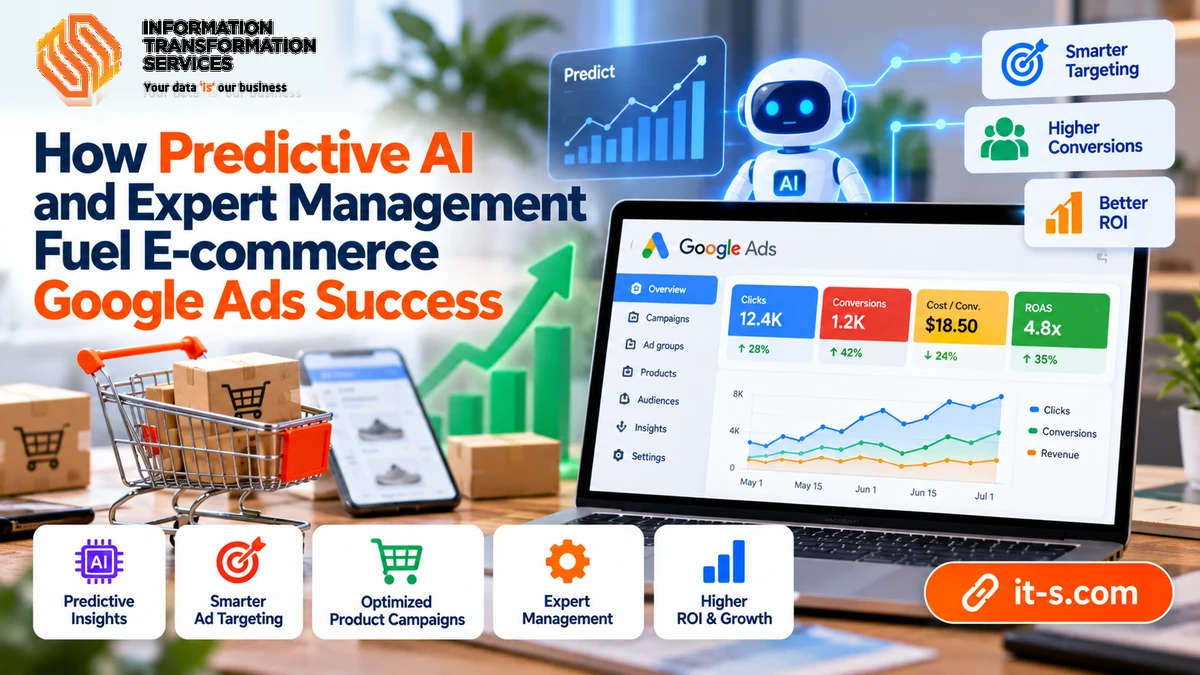
How Predictive AI and Expert Management Fuel E-Commerce Google Ads Success
The Australian e-commerce market is undergoing phenomenal growth. Industry forecasts project revenue to reach between US$50 billion and US$70 billion by 2026. This surge is largely driven by a digitally savvy population and a distinct rise in mobile commerce, which now accounts for over 26 percent of all online transactions nationwide. To capture this expanding audience, brands are increasingly turning to advanced digital advertising tools. However, navigating the modern pay-per-click landscape requires more than just a sizable budget. It demands a delicate balance between automated technology and strategic human oversight. For local businesses looking to scale, partnering with a proven google Ads agency in Sydney can be the deciding factor in outperforming competitors and maximising return on ad spend.
The Rise of Predictive AI in Paid Search
Artificial intelligence has fundamentally changed how businesses approach their marketing campaigns. Tools like Google’s Performance Max and the new AI Max bundle offer keyword-less targeting, advanced search term matching, and autonomous URL expansion to capture high-intent buyers. Marketers are currently using AI for content creation, and 61 percent believe the industry is experiencing its biggest disruption in two decades. This data highlights just how heavily brands rely on automation to scale their efforts.
When it comes to generating creative assets, the benefits of machine learning are undeniable. Fast-tracking the ad creation process enables teams to run rapid split tests across various product lines. For instance, using artificial intelligence to generate ad copy and headlines allows marketers to automatically test thousands of personalised variations in a fraction of the usual time. When tied directly to product feeds, these dynamic tools can sometimes result in significant improvements in Return on Ad Spend (ROAS). By removing the manual burden of writing endless permutations, marketing teams can focus on broader business objectives.
Why Human Expertise Remains Essential
Despite the impressive capabilities of predictive algorithms, technology alone is not a silver bullet. Native advertising AI often prioritises total budget consumption over a brand’s maximum profitability. Without careful direction, automated systems might aggressively bid on broad terms that drive traffic but fail to deliver actual sales. Experienced professionals must step in to steer bidding algorithms, implement comprehensive negative keyword lists, and protect profit margins from unchecked automated spend. They provide the necessary guardrails to ensure that artificial intelligence works for the business, not just for the ad platform.
Another significant challenge for modern e-commerce is what industry experts call the reconciliation tax. This occurs when fragmented data between e-commerce platforms, ad networks, and customer relationship management systems conflict with one another. Predictive models require accurate, unified signals to function correctly. Human data strategists remain essential to bridge these gaps, ensuring the algorithms operate on reliable, real-time conversion data rather than skewed metrics. Without human intervention to clean and verify this data, even the most sophisticated AI will optimise towards the wrong goals.
Strategies to Maximise Returns in an Automated Era
To truly unlock the potential of automated campaigns, e-commerce brands must adopt a hybrid approach. Blending the computational power of machine learning with nuanced human strategy ensures campaigns remain both efficient and profitable. Adapting to this new landscape requires actionable strategies that integrate seamlessly with your existing marketing framework.
Here are several proven tactics to enhance your digital advertising success:
Adopt a ROAS-split budget allocation. To safely test new conversational ad formats, allocate a portion of your budget to experimental AI campaigns while keeping the majority focused on proven, traditional formats. This protects your baseline revenue while you innovate.
Leverage regional data trends. Online shopping in Australia’s regional areas has outpaced metropolitan growth, rising by 18 percent compared to 16 percent since 2019. Marketers should use location-based bid adjustments to capture these high-growth regional markets rather than treating the entire country as a single demographic.
Focus on first-party data. Integrating your own customer data alongside predictive audience targeting can boost click-through rates and increase overall search impression share. This proprietary data provides a competitive edge that generic machine learning models cannot replicate.
Utilise granular reporting. Take advantage of new Channel Performance Reporting features to see exact metrics across Search, YouTube, and Display. This visibility allows for smarter manual budget allocations and better strategic planning.
Future-Proofing Your E-Commerce Growth
The future of e-commerce advertising is undeniably automated, but it is not entirely autonomous. While predictive algorithms can handle real-time auction efficiencies and generate endless ad variations, complex campaigns still require expert guidance. By combining the speed of modern marketing tools with the strategic foresight of seasoned professionals, Australian brands can navigate the competitive digital landscape. Investing in both advanced technology and the human intelligence required to direct it will remain the cornerstone of sustainable revenue growth for years to come.