

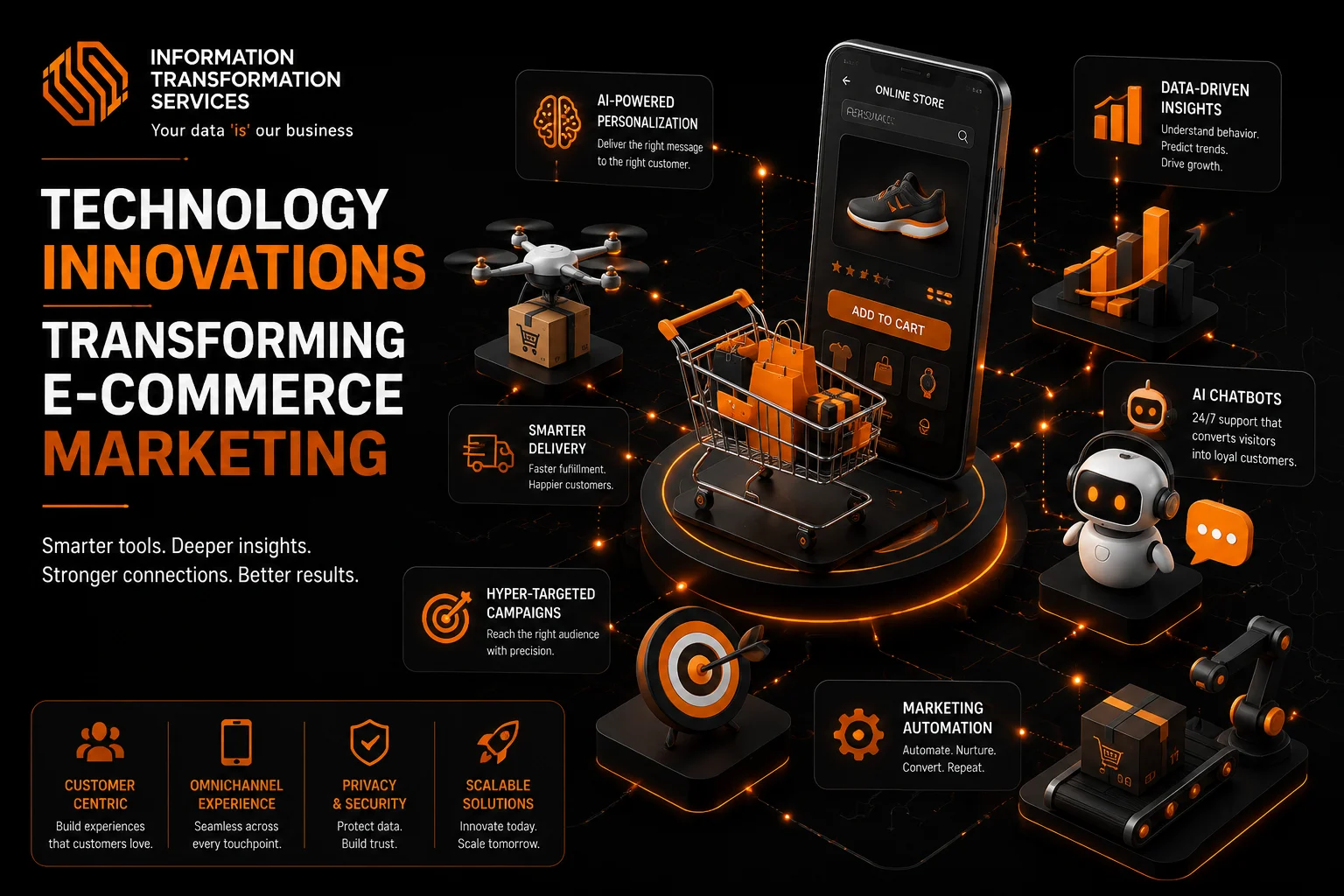
Technology Innovations Transforming E-commerce Marketing
The e-commerce industry is changing rapidly every day. With many other online stores, it is important to be ahead of the curve. Technology innovations are currently shaping a transformation on the e-commerce side of marketing strategy. These technologies are not just changing the customer experience but also marketing itself — from state of the art marketing platforms to next-gen mobile messaging for retailers!
In this post, we will discuss 20 reasons as to how technology innovations are changing e-commerce marketing. With these tools, businesses can expand their exposure, increase customer interaction, and eventually convert those leads into sales. These technologies all help enhance the competitiveness of e-commerce as an industry and the value offered to customers.
What is E-commerce Marketing is and Why Technology Makes the Difference?
And this is where e-commerce marketing comes in, with its strategies and tactics to sell products and services online. It encompasses many activities including social media marketing, content marketing, SEO, and email marketing. These processes are further facilitated by technology which brings much more efficiency, and makes it even more personalized.
Adopting advanced technology allows e-commerce marketers to automate processes, gain deeper insights on customers and customize the shopping journey. Without these innovations, businesses may end up losing valuable time and customers.
20 Reasons on How Technology Innovations Transforming E-commerce Marketing:
Innovation in Marketing Platforms
E-commerce businesses have integrated marketing platforms as a core tool to drive growth. These platforms assist businesses in managing and optimizing their advertising campaigns. Cutting-edge marketing platform can potentially help a business sell to a wider audience from a single interface, resulting in a more efficient marketing process altogether.
Usually, they combine different tools such as email automation, social media scheduling, and performance analytics so that marketers will find everything necessary in one place.
Customized Experiences for Customers
AI and Machine Learning in E-Commerce Personalised shopping experiences Using data about customer behavior, preferences, and purchase history, AI will address each individual taste and recommend products, thereby increasing conversions and sales.
By tailoring experiences that treat customers like they are your only customer, this causes them to feel valued, understood, and leads to even higher satisfaction and loyalty.
Chatbots and Virtual Assistants
Artificial intelligence (AI) based Chatbots and virtual assistants are game-changer for online shopping customer service experience. This enables businesses to have real-time interaction with customers, answering queries and providing assistance 24/7. Having access to automated customer support ensures that shoppers can get a swift resolution, which elevates the shopping experience.
Imagine having the ability to visualize a new product in augmented reality (AR), such as furnishing or flooring, right in front of you before making a purchase.
Augmented Reality (AR) for Product Visualization
AR has proved a boon to e-commerce marketing. With AR, customers can see the product in their environment before buying it. An example of AR in furniture retailing is when a customer can see how a piece of furniture will appear in the living room. This helps create extra confidence in the purchasing decision and lowers return rates.
Voice Search Optimization
However, due to the influence of voice-activated devices such as smart speakers, voice search optimization is no longer an optional practice for e-commerce businesses. To make your content more discoverable and attract more customers, marketers need to prepare their content to be optimized for voice search. With rising interest in voice search, it is important for businesses to rise up to the trend.
Social Commerce
Social commerce is the selling of goods directly via social media channels. E-commerce businesses have a presence on social media, and they can use tools such as Instagram Shopping and Facebook Shops to get that new customer where they are already spending their time with. It provides easier product-based browsing, purchasing, and sharing options for customers, thus making the shopping experience better.
Data-Driven Decision Making
E-commerce track and analyze customer behaviour using big data and analytics. Gathering insights into how customers interact, their preferences, and purchase patterns can enable data-driven decision-making for businesses. It allows them to run more specific marketing campaigns and conduct more efficient inventory management, therefore improving sales.
Mobile Messaging for Retailers of the Next Generation
Next-generation mobile messaging for retailers enables businesses to send personalized SMS, push notifications, and in-app messages. This technology enables retailers to directly contact their customers in the form of promotions, product updates, and personalized recommendations on the mobile devices which are delivered instantly to the customers.
Using mobile messaging, businesses can deliver experiences that are timely, relevant, and of value to customers, leading to better engagement and higher conversions.
Influencer Marketing Tools
Influencer marketing continues to expand as a pillar of e-commerce. Today, marketing platforms provide tools that allow you to manage influencer campaigns, track their performance, and measure your ROI. They boost brand awareness and traffic, with high conversion rates driven by influencers.
Customer Retargeting
With the help of retargeting technologies, businesses can reach out to people who visited their website but left without taking the desired action (such as making a purchase). Displaying ads to these customers on other platforms helps entice them to come back and complete the purchase.
Subscription Models
In e-commerce, subscription-based services are gaining momentum. Subscription models enable businesses to create predictable, recurring revenue streams. Subscription services are a brilliant fit for products that customers require on a regular basis – such as beauty products, food or clothes.
Dynamic Pricing Strategies
This technique employs algorithms to continually adjust prices in real-time based on market conditions, demand, and customer behavior. Dynamic pricing can be used by e-commerce businesses to not only remain competitive in terms of price but also maximise revenue. Prices can vary based on availability, time of day or competitor pricing changes, for example.
Mobile-Optimized Websites
With the amount of mobile traffic only increasing, a mobile-friendly website is key to an ecommerce-friendly experience. When customers can get the best shopping experience on their mobile device, favouring mobile-friendly websites. Mobile optimization involves responsive design, fast load times, and easy navigation, that can result in a higher conversion ratio.
Automated Marketing Campaigns
Automation tools have helped marketers run campaigns without having to intervene on a manual basis. For example, businesses can automate emails based on user actions, like sending reminders to customers about items in their shopping cart, or sending them birthday discounts. This allows them to save time and assures timely communication.
Seamless Payment Systems
Friction during the checkout is best avoided, which is where seamless payment systems come in. One-click payment solutions, the emergence and popularization of Digital wallets, and other payment innovations enable customers to make fast and easy purchases. This ease increases the customer experience and helps lower cart abandonment.
Blockchain for Added Security
The potential in Blockchain technology means an improved level of security and transparency within e-commerce. Blockchain, brings transparency and reduction of fraud to enhance trust among the customers, something companies are surely leveraging these days. Especially true for businesses where they handle sensitive payment information, etc.
Customer Feedback Tools
Feedback tools allow e-commerce businesses to collect feedback right from customers. From Surveys to Polls and Review systems, a business can measure how content its customers are and where improvements are necessary. Over this data, businesses can analyze and customize their offerings and overall shopping experience.
Artificial Intelligence-Driven Merchandise Suggestions
Ecommerce sales need AI achievements product recommendations. AI can analyze customer data and predict the products customers are interested in purchasing based on their browser history. Such recommendations create greater chances of additional sales and overall, enhances the customer experience.
Advanced Search Functionality
So Advanced search functionality allows customers to find what they want in less time. Predictive search, voice search, filters, etc. Customers find what they need. An effective search mechanism contributes to more sales and happy customers.
Yotpo — well-recognized loyalty and social proof solution
Yotpo is a modern marketing solution for e-commerce to utilize the social proof and loyalty systems with its solutions. Yotpo allows businesses to collect and showcase customer reviews, ratings, and photos, increasing overall credibility and trust. It also features robust tools for launching and managing loyalty programs, simplifying customer retention through repeat purchase rewards.
Yotpo is an all-in-one platform that integrates with your e-commerce platforms to help you increase engagement, keep customers, and convert sales.
Conclusion
Innovations in technology are changing the way e-commerce businesses promote their products. By embracing innovative marketing platforms and implementing next-gen mobile messaging for retailers, businesses can improve customer quality metrics – also known as customer engagement, boost conversion rates and create long-lasting bonds with their customers. These technological advancements are the facilities that help business to stay competitive and relevant in the ever-evolving digital space.
FAQ’s
What is the impact of AI and machine learning on e-commerce marketing?
By analyzing their purchasing behavior, AI and machine learning personalize customer experiences. As an example, an AI-powered recommendation engine can recommend products based on browsing history that improve conversion rates and also make the customers happy.
What is social commerce in the e-commerce marketing?
Social commerce is the type of experience when shopping is embedded within social media platforms, allowing businesses to sell directly on social networks such as Instagram or Facebook. This allows users to shop without leaving the app, creating a seamless purchasing process and increasing conversions,For example;
What is the benefit of dynamic pricing for e-commerce businesses?
Dynamic pricing refers to the ability of the platform to change the price of products in real-time based on the demand, competition and consumer behaviour on the e-commerce site. As an example, using online behaviours an e-store might drop prices in an off-peak hour, or send them rising when there is a sudden surge in demand – which will create revenues and need minimal effort to sustain.
Why is mobile optimization important for e-commerce?
Mobile optimization includes preparing a site for smartphones and tablets so as to build a site that works well on those devices. As mobile traffic continues to grow, a mobile-optimized website enhances usability, resulting in more conversions. Responsive designs, for example, ensure that small screens can navigate their content easily.
What are the effects of voice search and optimization on e-commerce?
When it comes to voice search you can optimise on that part of traffic that falls into voice-activated devices equipped with smart speakers. Example: If your product pages are optimized for voice search, you can appear when users query about a particular item using natural language.
How does blockchain fit into e-commerce marketing?
The transaction records on a blockchain are transparent and tamper-proof, which translates into increased security. Blockchain, on the other hand, can provide features that make that specifically beneficial, as one of its major applications can, for example, be e-commerce, where blockchain secured pay-ins would increase consumer trust, thus increasing levels of fraud and increasing transaction transparency.